

 Marcellin Champagnat was born in 1789 in revolutionary France. At the age of eleven and with little aptitude for academic work, Marcellin decided he preferred farm work to hours spent over books. A few years later, a visiting priest suggested that he might like to train for the priesthood. Marcellin found the early years of his studies extremely difficult.
While in seminary, Marcellin and some others gave thought to the founding of the Society of Mary (the Marists). He was determined the Society should include teaching Brothers to work with rural children with no Christian education.
In 1816, in his first parish, he was called to the bedside of a dying sixteen-year-old boy completely ignorant of Christian teaching. Deeply moved by this experience, Marcellin decided to act.
In January 1817, Marcellin and two others formed the nucleus of the Marist Brothers. Others soon followed. A primary school was established which became a teacher training centre for the Brothers. Marcellin motivated them with his enthusiasm for teaching and spreading the gospel, teaching them how to pray and to live in community.
After a long and painful illness, Marcellin died on 6 June 1840, leaving this message in his Spiritual Testament: “Let there be among you just one heart and one mind. Let it always be said of the Little Brothers of Mary as it was of the early Christians: See how they love one another!”
Marcellin’s simple educational philosophy: to teach children, one must love them. He saw God at the centre of life and Mary as a sure means of attracting people to God.





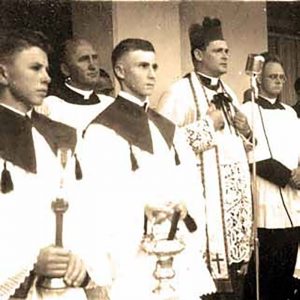

 Founded in 1817, the Marist Brothers is an international community with the goal of educating young people. In various parts of the world, Brothers minister in schools, work with young people in parishes and religious retreats, at-risk youth settings, young adult ministry and overseas missions.
 In the mid nineteenth century, the Bishop of the Cape set about getting religious brothers and sisters to teach the children in his small Catholic community. Answering his invitation, five Marist Brothers landed in the Cape in 1867 and established the first two Marist schools outside Europe in Cape Town. A sign reading “Marist Brothers’ Schools” can still be seen on an arched gateway leading from the Public Gardens to the original school building (now an annex to the Art Gallery). The concern of the early priests and religious was to care for their relatively small Catholic communities.
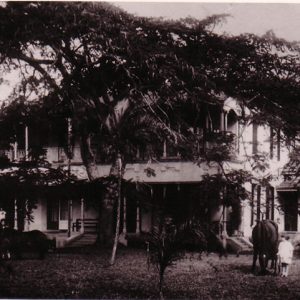
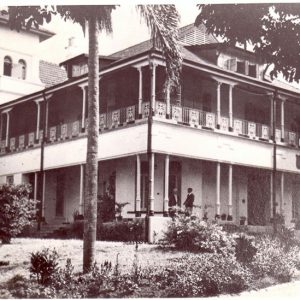
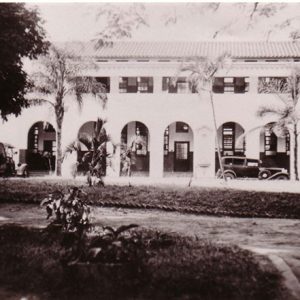
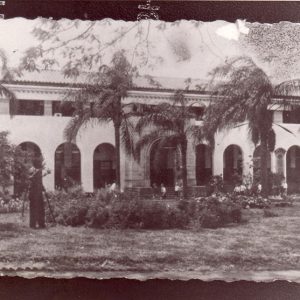
 In 1928, the Marist Brothers purchased a large property, known as ‘The Maze’, in Upper Glenwood, Durban, with the intention of opening a Catholic school for boys. St Henry’s opened on 4 February 1929, with just 17 names on the roll. Since those early days, the College has grown in size and numerous additions have been made to the original buildings. There are now more than 600 scholars attending St Henry’s. In the 1990s, St Henry’s made the decision to enroll girls as well and since 2008, girls have been matriculating along with the boys.


